When light switches on a Neuron – 2026 Nobel Prize in Physiology or Medicine
6 Oct , 2026
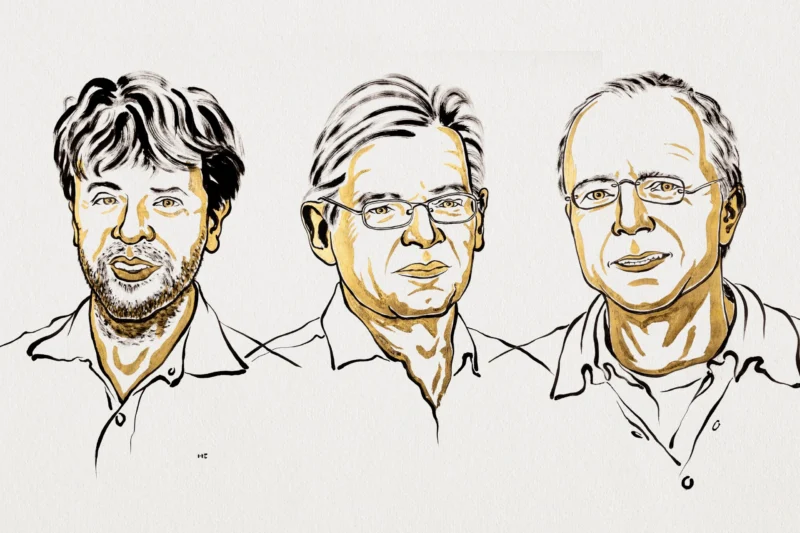
The 2026 Nobel Prize in Physiology or Medicine was awarded to Karl Deisseroth, Peter Hegemann, and Georg Nagel for their discoveries on light-activated ion channels and optogenetics. Deisseroth works at Stanford University; Hegemann at Humboldt University of Berlin; Nagel at the University of Würzburg.
To understand the discovery, one must start with the single-celled alga Chlamydomonas reinhardtii. To orient itself toward light, it uses special proteins called channelrhodopsins. Hegemann and Nagel understood that they function like tiny switches: when they receive light, they open and allow the flow of ions.
Deisseroth took the next step: by inserting these proteins into nerve cells, a pulse of blue light could activate them with millisecond precision. It then became possible to turn on or silence selected groups of neurons in the brains of living animals and observe the effects on behavior.
Thus optogenetics was born, a technique that changed the way we study the brain. Neuroscience could observe which circuits activated during an emotion or an action. Optogenetics allows scientists to target a specific circuit and directly verify its function. It is like lighting up, one by one, the streets of a city to understand where they lead.
The medical value is immense. This technology allows the study of altered circuits in diseases, from Parkinson’s to epilepsy, and from depression to addiction. However, this does not mean that therapies for humans already exist: application and safety challenges remain in delivering light to deep brain areas and controlling its long-term effects.
This Nobel Prize also rewards an incredible and fascinating connection between distant fields: the study of algae, genetics, engineering, and psychiatry. None of these fields alone could have produced optogenetics. Research thrives through collaboration and intellectual freedom.
A protein used by an alga to seek light has become a tool for exploring the brain. It is the most powerful image of the 2026 Nobel: the solutions to medicine’s major problems are often all around us, but it takes curiosity and vision to recognize them.
Light, in this case, serves not merely to view the brain, but finally to question it.
Editorial by Professor Antonio Giordano published in Il Mattino