The Broken Brotherhood: The Science Behind the Loss of a Part of Oneself
20 Oct , 2026
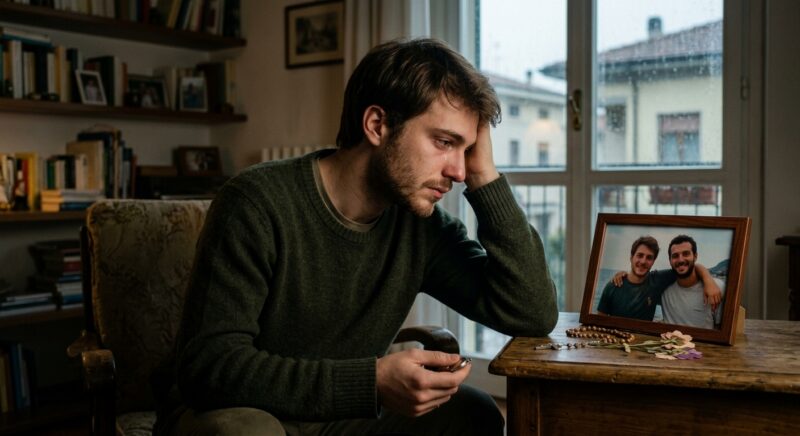
In Sergio Leone’s masterpiece “Once Upon a Time in America,” the loss of one’s companions is not merely a narrative driver: it represents the fracture of a shared history. The phrase “When you lose a brother, you also lose a part of yourself” remains a metaphor rather than a neurological diagnosis, yet it powerfully describes an experience recognized by grief psychology: the death of a brother or sister can disrupt the sense of continuity in one’s life.
The sibling bond is often among the longest-lasting in a person’s existence. Brothers and sisters share environments, rituals, conflicts, family figures, and memories that contribute to the construction of autobiographical identity. This does not mean that memories are “stored” in the other person, but rather that many memories are recalled and reinterpreted through a relationship: when that person disappears, an irreplaceable witness to a part of our history is also lost.
Research on sibling grief is less extensive than that dedicated to the loss of a spouse, child, or parent. However, available studies show that some survivors may develop persistent symptoms of grief, depression, anxiety, or post-traumatic stress, especially when the death is sudden or violent. There is no inevitable outcome: intensity and duration depend on the quality of the relationship, the circumstances of the loss, personal resources, and the support received.
The neurobiology of grief also requires caution. Grieving individuals may experience activation in brain networks involved in attachment, salience, memory, and the affective component of pain; these data, however, do not demonstrate a specific “deafferentation” nor a neurological equivalent of phantom limb syndrome in sibling grief. The brain does not lose an organ: it must update models, expectations, and habits built around a presence that is no longer there.
There is also a social issue. The pain of someone who loses a sibling may receive less attention than that of parents, spouses, or children: it is a form of sometimes unrecognized grief, or disenfranchised grief. When pain is minimized, isolation, insomnia, and stress can linger. Active listening, family networks, support groups, and—when suffering severely impairs daily life—qualified psychological help can foster adaptation.
Noodles from “Once Upon a Time in America” and his companions experience an elective brotherhood, but the narrative intuition remains valid: human identity is also relational. Losing a sibling does not literally erase a part of the brain; however, it forces one to reconstruct their biography without one of the people who guarded its most ancient language. It is this profound reorganization, both affective and cognitive, that makes sibling grief an often invisible wound deserving of greater scientific and social attention.
Editorial by Professor Antonio Giordano for the column “Medicina gli Highlights” published in Il Mattino