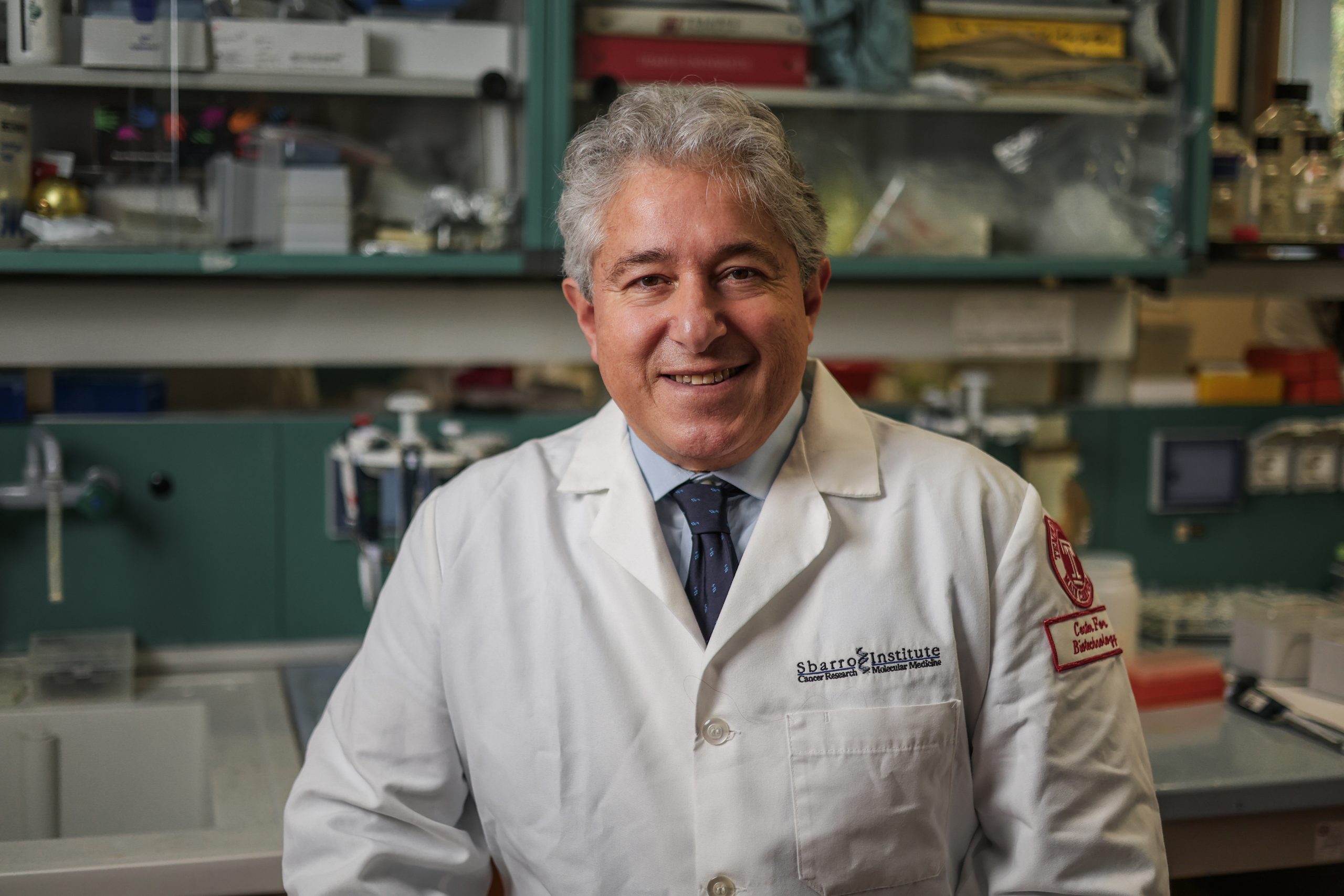
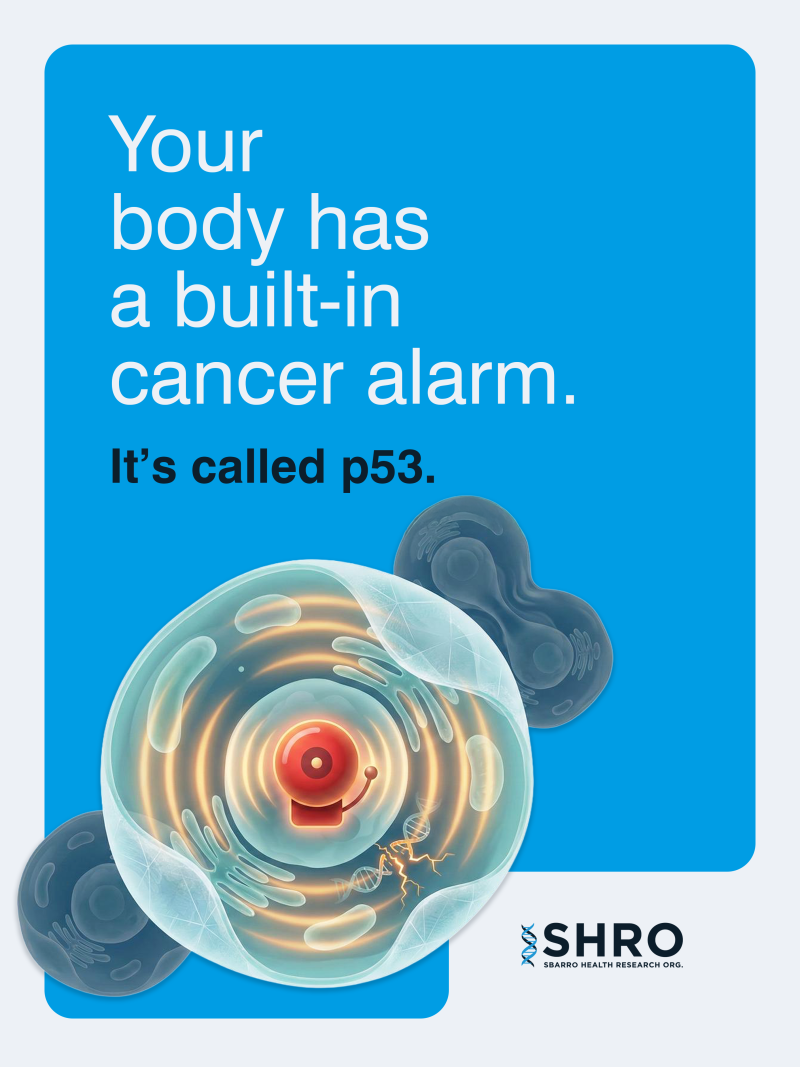
Your body has a built-in Cancer Alarm. It’s called p53
12 Feb , 2026
How SHRO researchers mapped the molecular mechanism that stops damaged cells before they become tumors — and why it matters for the future of cancer prevention.
Every day, billions of cells in the human body divide and replicate. Most of the time, this process runs smoothly. But sometimes — due to aging, oxidative stress, UV radiation, or toxic exposure — something goes wrong. DNA gets damaged. And a damaged cell that keeps dividing can become a tumor.
So how does the body stop it?
The Guardian of the Genome
The answer lies in a protein called p53, often referred to as the “guardian of the genome.” When p53 detects serious DNA damage, it acts like a fire alarm inside the cell: it can pause division to allow for repair, permanently shut the cell down through a process called cellular senescence, or — if the damage is beyond saving — trigger the cell’s self-destruction through apoptosis.
This decision-making process is at the heart of the body’s natural cancer defense. And understanding exactly how it works has been a central focus of research at the Sbarro Health Research Organization (SHRO).
What SHRO Researchers Found
During the latest years and lately in a comprehensive review published in Biomolecules (2020), Prof. Antonio Giordano — Director of SHRO and the Sbarro Institute for Cancer Research and Molecular Medicine at Temple University — together with its researchers mapped the molecular pathways through which p53 regulates cellular senescence.
The review examined how p53 responds to different types of cellular stress and how its activity determines whether a cell enters a temporary pause, a permanent shutdown, or programmed death. Several factors influence this decision: the severity and duration of the damage, the concentration and post-translational modifications of p53, and the surrounding tissue microenvironment.
Two key signaling pathways emerged as central to this process: the p53-p21cip1 pathway, which plays a primary role in initiating senescence, and the p16-INK4a-Rb pathway, which is critical for maintaining the senescent state over time. These two pathways interact continuously, creating a layered defense system that evolves as the cell progresses through different stages of senescence.
The Paradox: Protector and Threat
One of the most important insights from the review is that cellular senescence is not a simple on-off switch — it is a dynamic, multistep process with both protective and potentially harmful consequences.
On one hand, senescence is a powerful tumor suppressor mechanism. By permanently arresting damaged cells, it prevents them from proliferating and forming tumors. Research has shown that reactivating p53 in cancer cells can actually induce tumor regression through senescence.
On the other hand, senescent cells remain metabolically active. Over time, they secrete a cocktail of pro-inflammatory molecules known as the Senescence-Associated Secretory Phenotype (SASP). While SASP can recruit immune cells to clear damaged tissue, its prolonged presence has been linked to chronic inflammation, contributing to conditions such as atherosclerosis, diabetes, Alzheimer’s disease, Parkinson’s disease, and chronic obstructive pulmonary disease (COPD).
Perhaps most paradoxically, SASP can even create a microenvironment that supports tumor growth — meaning the very mechanism designed to prevent cancer can, under certain conditions, contribute to its progression.
Why This Matters for the Future
Understanding the dual nature of p53-mediated senescence opens the door to several promising therapeutic strategies:
Reactivation of p53 in tumors: Small molecules that stabilize p53 (such as Nutlin, which inhibits the p53-MDM2 interaction) could force cancer cells into senescence, offering an alternative to conventional therapies that rely on inducing extensive DNA damage.
Senolytic therapies: Drugs designed to selectively eliminate senescent cells could reduce the harmful effects of SASP accumulation, potentially slowing aging-related diseases and preventing the pro-tumorigenic microenvironment.
Novel biomarkers: Identifying stage-specific markers of senescence (such as p130/Rb2 for late-stage senescence) could improve early detection and enable more personalized treatment approaches.
These are not miracle cures — but they represent a deeper, more precise understanding of how the body fights cancer at the cellular level. And that understanding is the foundation for the next generation of targeted, personalized therapies.
About This Research
This work was supported by the Sbarro Health Research Organization and the Commonwealth of Pennsylvania, as well as the European Union’s Horizon 2020 Research and Innovation Program under the Marie Skłodowska-Curie grant.
Full citation:
Mijit M., Caracciolo V., Melillo A., Amicarelli F., Giordano A. “Role of p53 in the Regulation of Cellular Senescence.” Biomolecules, 2020, 10(3), 420. DOI: 10.3390/biom10030420
Follow us SHRO for more from the frontlines of cancer research.