The Habitus of Excellence: Aristotle’s Lesson between Ethics and Science
31 Mar , 2026
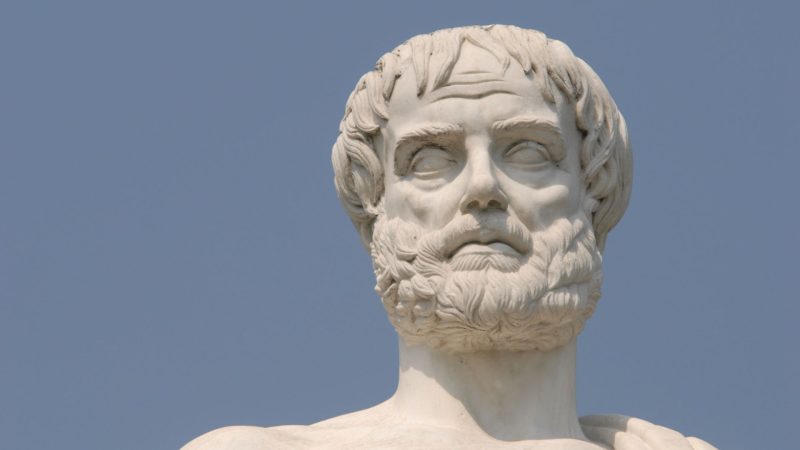
A millennial intuition of Aristotle, forcefully returned to relevance in the chaotic flow of modernity and social media, reminds us of a truth that we often prefer to ignore: discipline beats talent. If talent is a seed, a potential enclosed in a fragile shell, discipline is the cultivated soil that allows that seed to sink its roots and transform into a centuries-old oak.
Without the constancy of nourishment and protection from the elements, even the most prized sprout is destined to wither before bearing fruit.
In the Nicomachean Ethics, Aristotle accomplishes a true Copernican revolution in moral thought. He dismantles the idea that virtues are “innate gifts,” gifts of fate or genetics.
On the contrary, he defines them as qualities that we acquire exclusively through exercise.
Aristotle writes with extreme clarity that “ethical virtues arise from habit” (ethos).
This vision transforms ethics from abstract theory to muscular practice: one does not become just by studying treatises on justice, but by performing just actions.
One does not become courageous by reading about heroism, but by concretely facing one’s own fears.
Excellence is not a bolt from the blue or a single act of brilliance, but the formation of a habitus: a stable disposition of the soul obtained through repetition.
As the famous maxim inspired by his thought recites: “We are what we do repeatedly.
Excellence, therefore, is not an act, but a habit.” Talent may offer a burning sprint at the start, but without routine, that advantage inevitably fades in the marathon of life.
Transposing this thought into the modern professional world means understanding that discipline is not a restriction of freedom, but the tool to liberate potential.
Aristotle introduces the concept of phronesis (practical wisdom), which helps us find the “golden mean” between excesses. In daily work, phronesis translates into calibrated habits: the ability to sit at the desk even when motivation is scarce, maintain a regular wake-up time, and dedicate fixed time to deep study.
It is this “liturgy of doing” that allows surpassing those who, though gifted with genius, lack the perseverance necessary to complete complex works.
Consistency transforms inspiration into product and idea into tangible reality. Those who rely only on inspiration are slaves to their own mood; those who cultivate habitus are masters of their own destiny.
If there is a field in which the lesson of the Stagirite shines, it is scientific research.
Often the collective imagination celebrates the sudden “Eureka!”, but reality is made of methodical observation and meticulous analyses.
Aristotle was a pioneer of the empirical method, basing knowledge on the tireless cataloging of natural phenomena.
In modern science, this translates into a habit of precision.
The discipline of documenting every variable and repeating a test dozens of times is not boring bureaucracy, but the very essence of truth.
Research requires a “cognitive resilience” that is built only through habit: the daily reading of papers or physical exercise to maintain clarity are the invisible pillars of great discoveries. A talented but inconsistent researcher will produce only fragmentary intuitions.
On the contrary, those who cultivate the scientific habitus develop a mental disposition toward perseverance that allows them to navigate years of experimental failures.
Following Aristotle, we must stop waiting for inspiration: success belongs to those who have the discipline to stay in the laboratory, to observe one more time, and to transform daily commitment into a destiny of excellence.
Article by Prof. Antonio Giordano for Il Mattino